



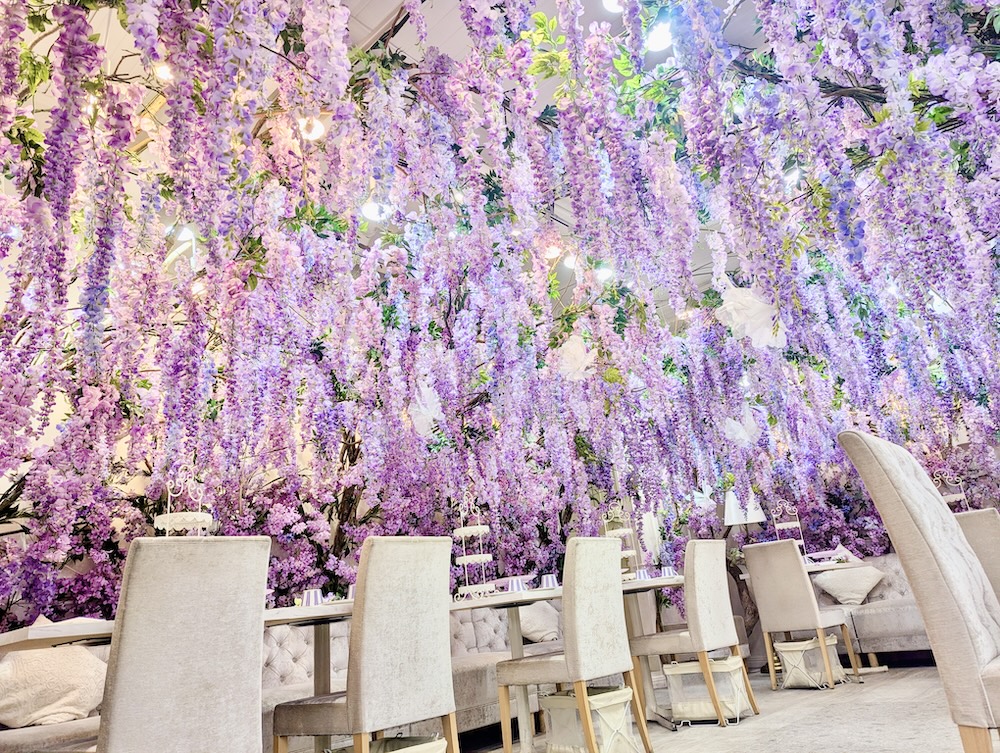
The appeal of afternoon tea in Japan can no longer be explained simply by the sweets and tea on the menu. Of course, the flavor of each plate and the beauty of its presentation remain important. In recent years, however, some of the most talked-about afternoon tea offerings in Japan have been designed not only around “what you eat,” but also around “what kind of space you are in” and “how that space makes you feel.”
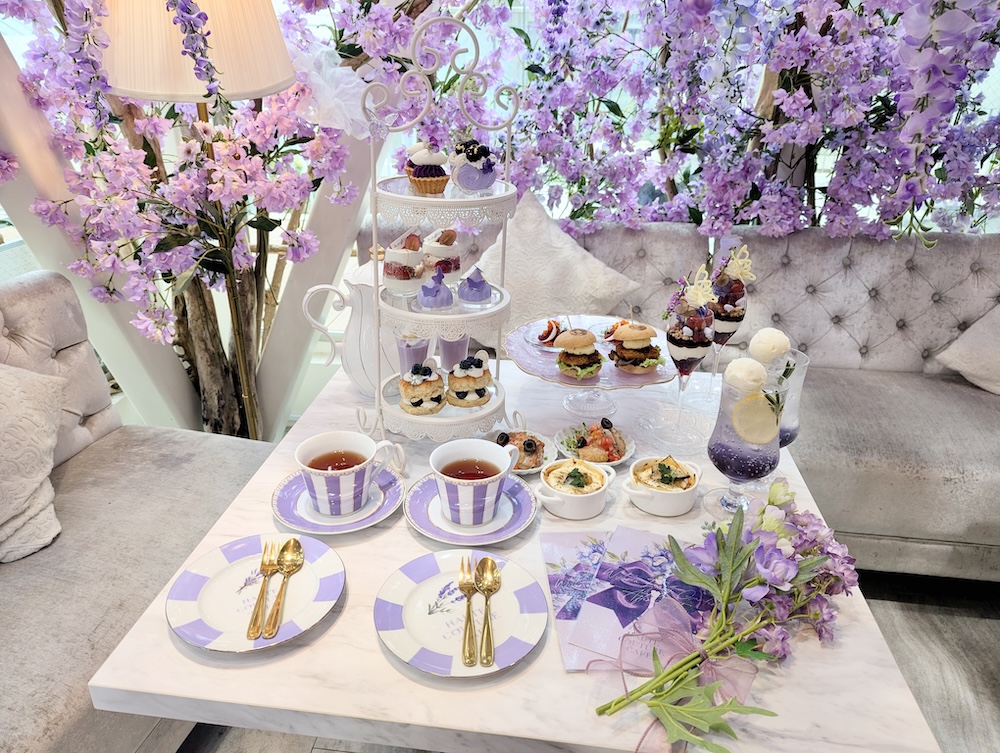
One symbolic example is the “Wisteria Fairy Garden Afternoon Tea,” offered at HAUTE COUTURE CAFE Omotesando in Tokyo, Japan. Inside the cafe, around 3,000 wisteria flowers appear to cascade from the ceiling, while deep purple and pale lilac gradations envelop the entire space. From the moment guests open the door, they are drawn into an immersive atmosphere that feels far removed from everyday life.
Afternoon tea of this kind in Japan goes beyond the framework of a simple food-and-drink menu. It is, in a sense, experience-based content that allows guests to enjoy the stay itself. Sitting at the table, surrounded by flowers, with themed sweets and savory items arranged before them, visitors spend a stretch of time that functions almost like a small journey.
Starbucks, for example, has long presented the idea of a “third place,” somewhere that is neither home nor work. Although it is a place to drink coffee, it also offers added value: relaxation, conversation, work, and time to reset oneself. More than the product itself, what mattered was that people found a reason to be there.
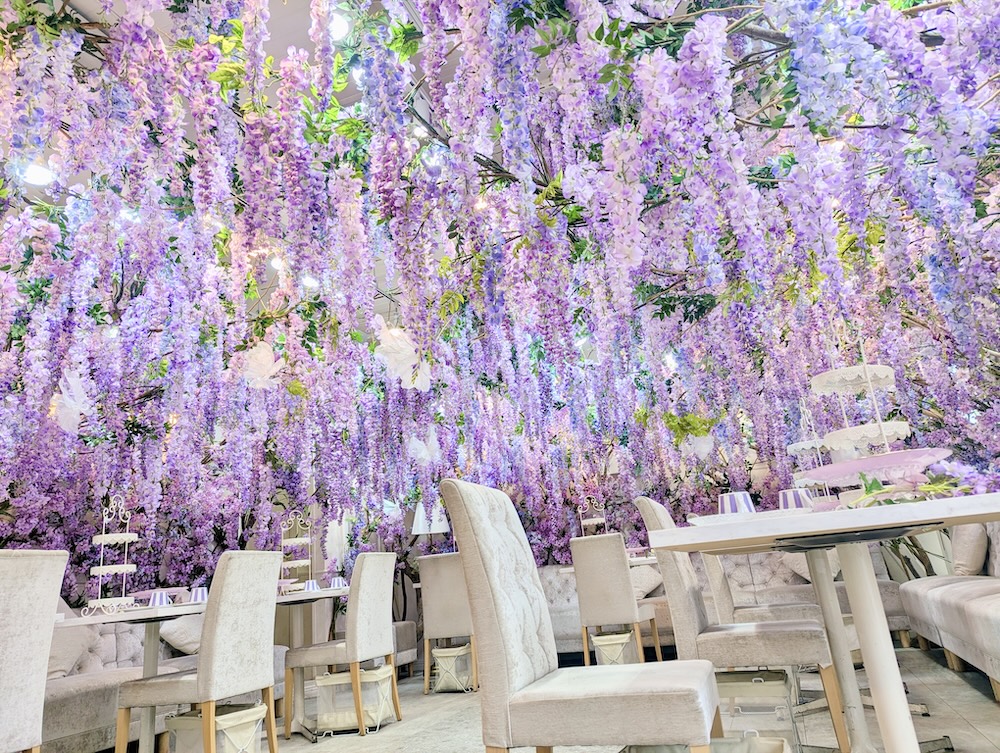
Today’s experience-driven afternoon tea culture in Japan offers a similar kind of value. What hotels and cafes provide is not merely tea and sweets. They offer a place to step slightly away from daily life and shift one’s mood. A place to share special time with friends or family. A place to take photos, preserve memories, and want to look back on later. In that sense, afternoon tea in Japan is becoming something that could be described as a “third place for food.”
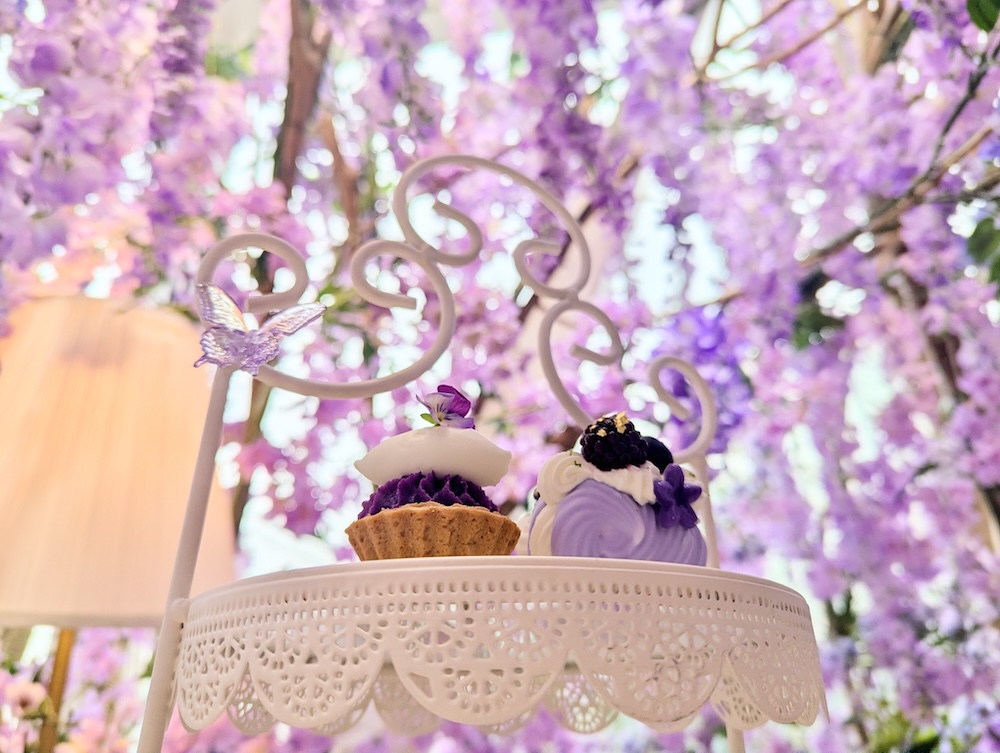
In concepts such as the “Wisteria Fairy Garden Afternoon Tea,” where spatial design and the worldview of the menu are integrated, guests do more than simply enjoy sweets. They enter the theme itself. A wisteria-colored parfait, cassis mousse reminiscent of butterflies, purple sweet potato tart, and an shrimp cutlet burger served on a pale wisteria-colored bun all feel like extensions of the space. The experience does not end on the tabletop. Interior decoration, light, color, tableware, fragrance, and conversation are all connected as one unified experience.
These extraordinary spaces also pair well with Japan’s social media age. Beautiful interiors and gorgeous sweets make people want to take photos and share them with others. Yet the essence is not merely that they are photogenic. It is the ability to escape into another world, even briefly, amid busy daily life. It is the chance to enjoy that time as a reward for oneself. That is one of the reasons why modern afternoon tea in Japan continues to gain support.
Afternoon tea has long been enjoyed as an elegant tea culture. Today, however, its value is expanding even further in Japan. It not only satisfies the sense of taste, but also delights the eyes, lifts the mood, and provides a memorable experience. The main attraction is no longer only the sweets arranged on the stand. Rather, the “extraordinary experience” that begins the moment guests step into the space is becoming the true appeal of contemporary afternoon tea.
People no longer visit simply to eat; they visit to experience. Sweets experiences that fill not only the stomach but also the memory are likely to remain a key source of new value creation for cafes, hotels, and restaurants in Japan.
Related Post
[Report] Starbucks Japan Revives Five Classic Frappuccinos in Updated Form, Including Melon and Coffee Jelly — We Tried Them Early
[Report] A Visit to the New Eggs ’n Things Store Opening in Roppongi, Japan, on April 3 — Featuring Pancakes to Satisfy Sweet Cravings and an Exclusive 100% Rice Flour Waffle
Japan’s Kona’s Coffee Serves Up a Tower of Cream: Strawberry & Banana Whipped Pancakes